Glassmorphism
Also called Frosted glass, Blur UI
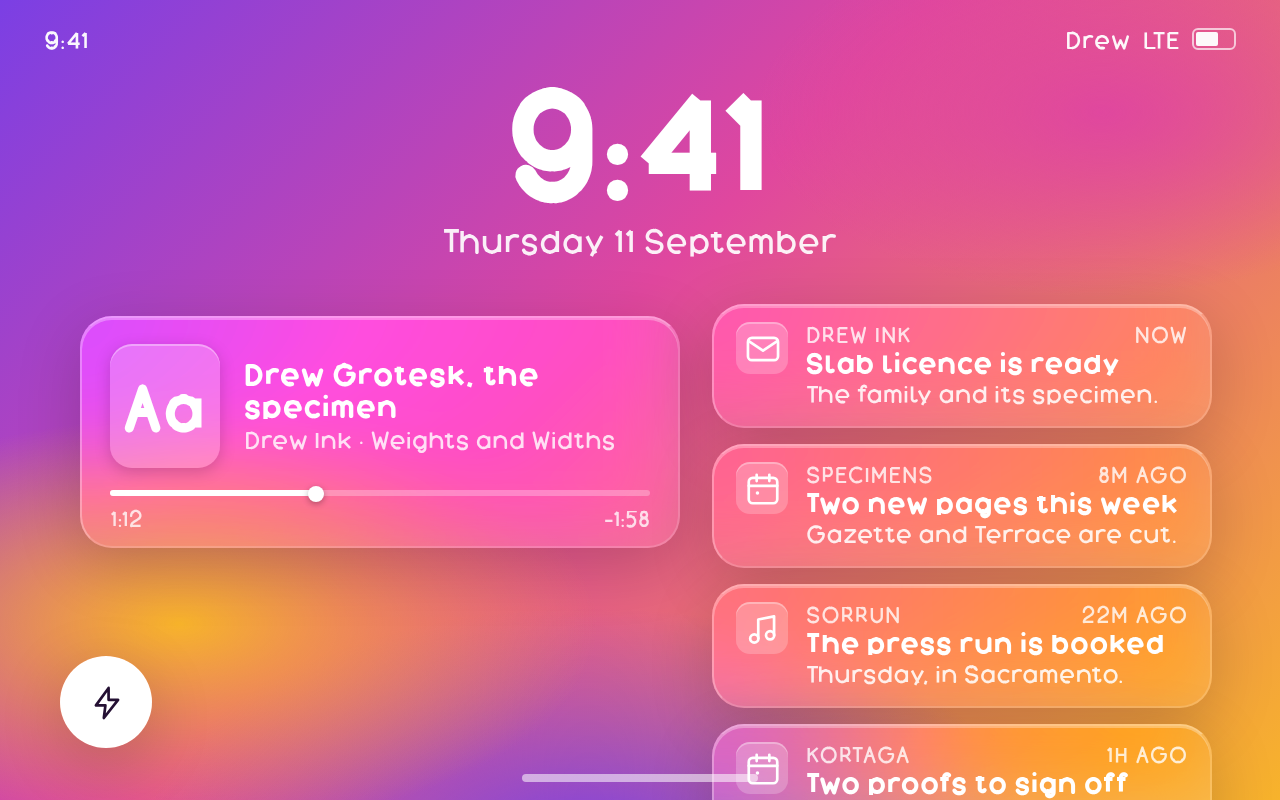
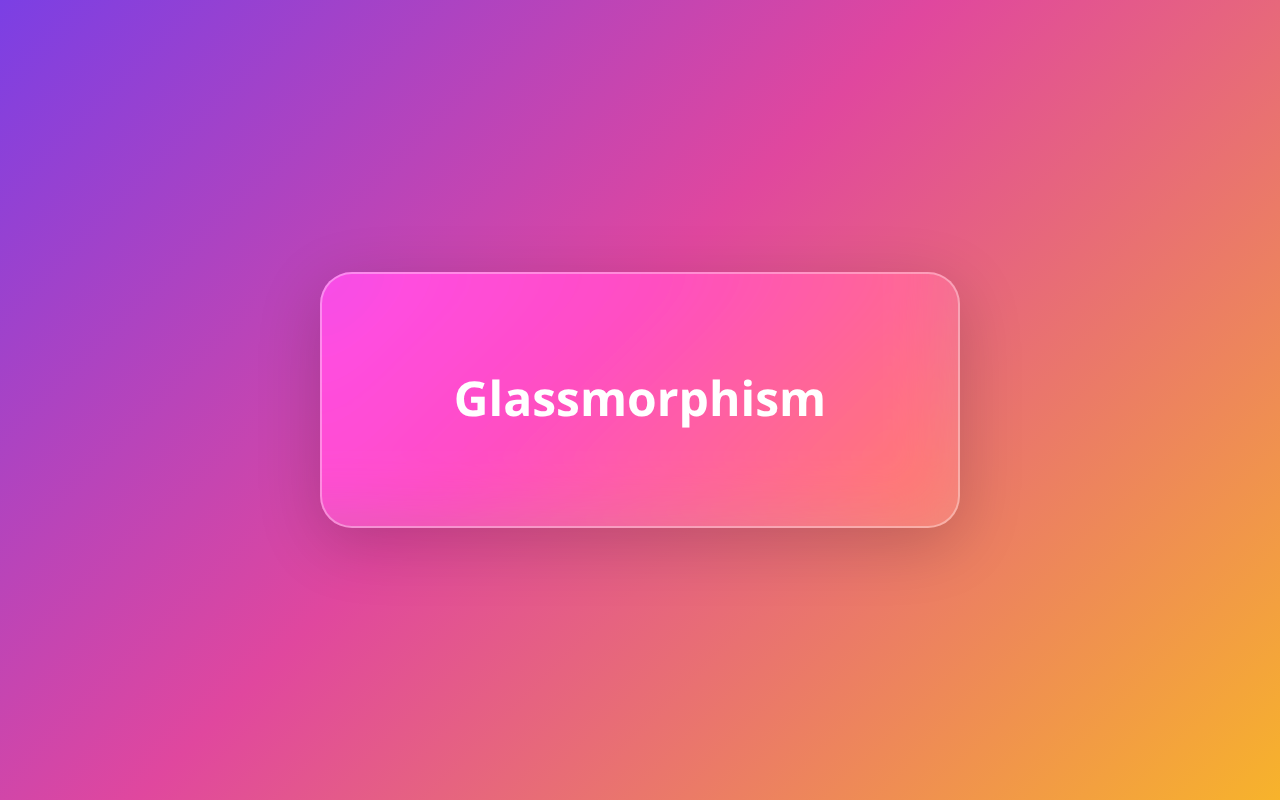
A panel you can partly see through, blurred so that whatever is behind it becomes colour and light rather than detail.
Near it
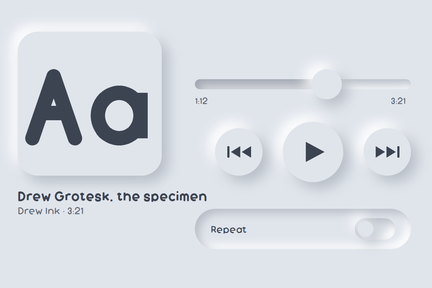 Neumorphism
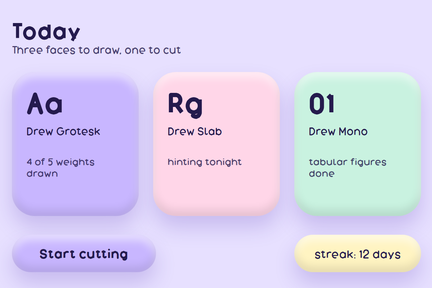 Claymorphism
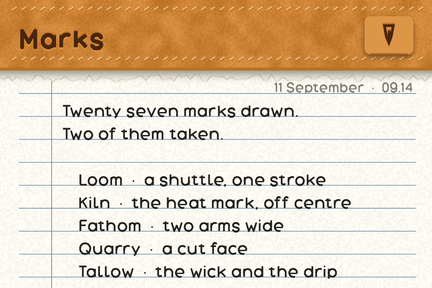 Skeuomorphism
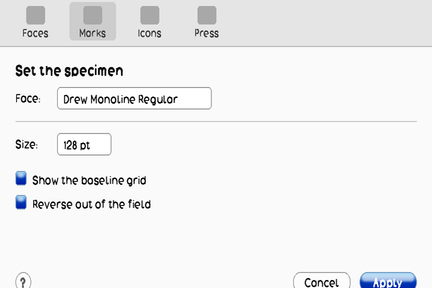 Aqua
Aqua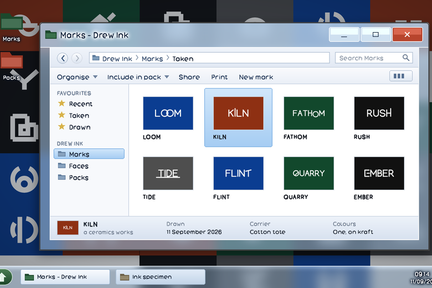 Aero
Aero Elevation
What it looks like
Glassmorphism
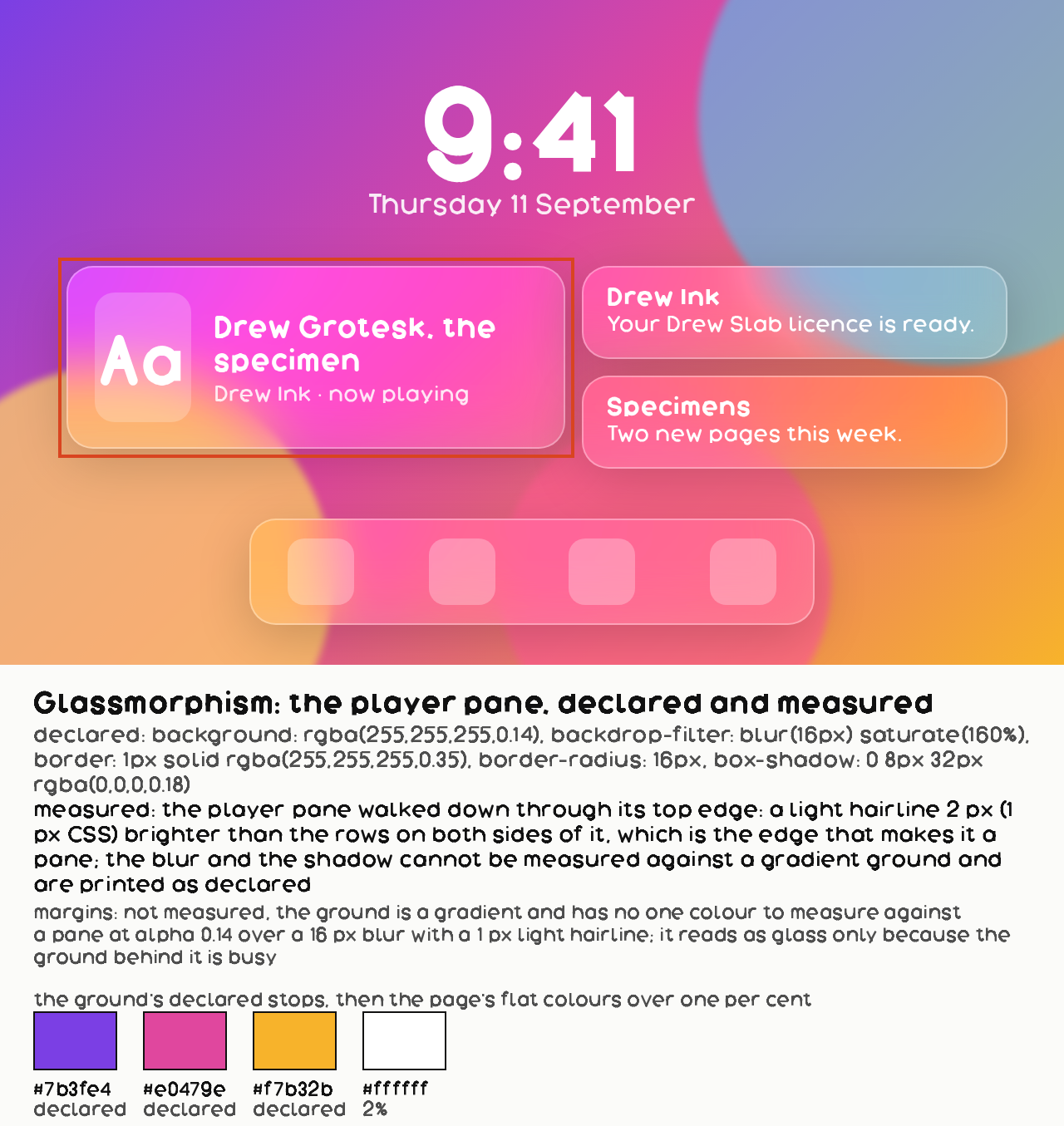
background: rgba(255,255,255,0.14);
backdrop-filter: blur(16px) saturate(160%);
border: 1px solid rgba(255,255,255,0.35);
border-radius: 16px;
box-shadow: 0 8px 32px rgba(0,0,0,0.18);
color: #ffffff;
What it is made of
| the background it sits on | busy and coloured | this is a requirement, not a preference: on a flat ground the blur has nothing to blur and the panel disappears |
| alpha | 0.10 to 0.25 | above that it stops reading as glass, below it stops reading as a panel |
| blur radius | 8px to 40px | 16 is the common setting |
| border | a single light hairline on the top and left edges | the edge is what makes it a pane rather than a haze |
Where it came from
The name dates from around December 2020, from Michal Malewicz writing at Hype4. The look is much older: Windows Aero in 2006, iOS 7's frosted panels in 2013, and macOS Big Sur in 2020 all did it before it had a word.
Where it fails
Text sits directly on it. The ground behind is arbitrary and can move, so the contrast ratio under the text is unknown and changes while you scroll. Compositing a backdrop filter over a scrolling list is also expensive enough to drop frames on mid-range hardware.
Sources
- Glassmorphism in user interfaces, Michal Malewicz, Hype4 not read