Geometric sans
Also called Geometric grotesque
A sans built from the circle and the straight line, so its o is close to a true circle and its lowercase a usually has no bowl-and-stem, just a ring.
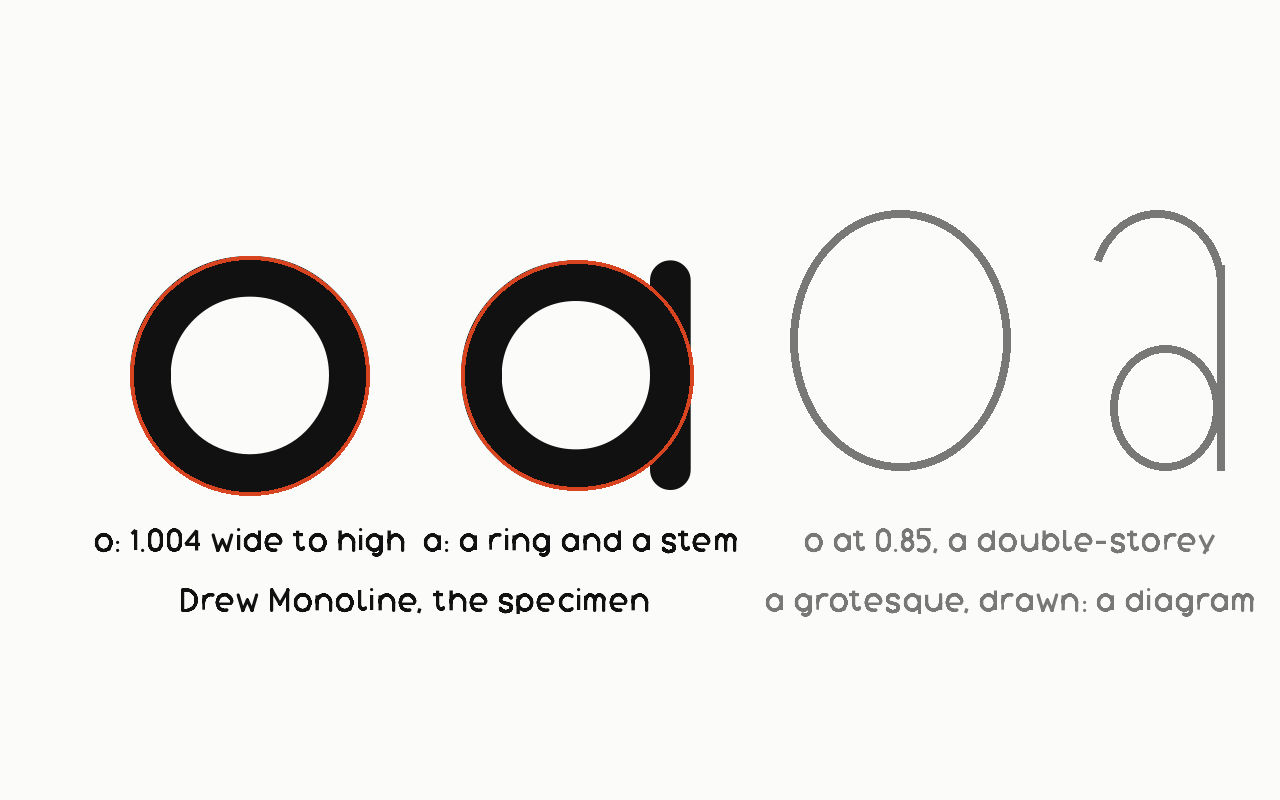
Near it
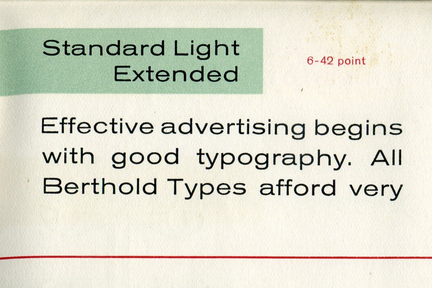 Grotesque
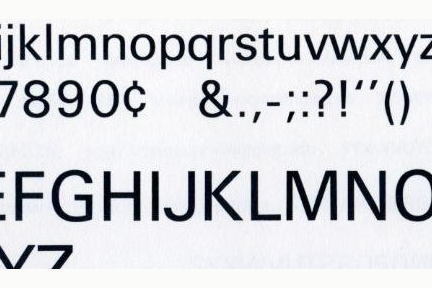 Neo-grotesque
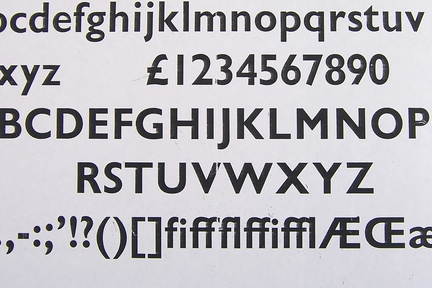 Humanist sans
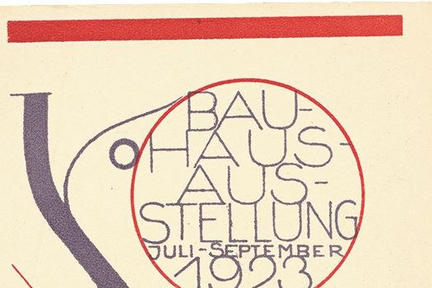 Bauhaus
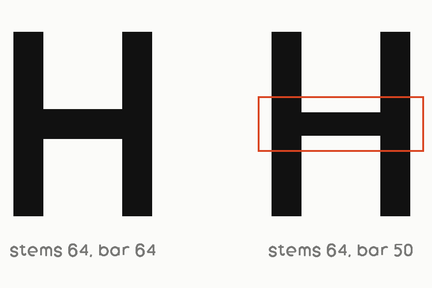 Optical correction
What it is made of
| o | a circle or very near one | |
| a | single-storey | |
| optical correction | required and often skipped | a mathematically circular o reads smaller than a square of the same height, so it must be drawn overshooting |
| VOX DID NOT HAVE THIS CLASS, which is the first thing to know about the term | the system put every sans-serif into ONE class. ATypI: "the Linéales (Lineals) combined all sans-serif types, such as Futura and Gill Sans, into one class." Futura is named in that sentence as an example of the single class, not of this one. | ATypI, "ATypI de-adopts Vox-ATypI typeface classification system", published 27 April 2021, read whole (1,136 words). So this term is a LATER SUBDIVISION of a Vox class rather than a Vox class, and a record that presents it as one is repeating a tidier history than the sources support. Maximilien Vox's own 1954 text is NOT HELD AND UNREAD in this house. Everything here comes from the custodian's 2021 statement, which is a primary for the system's history and its withdrawal and is NOT a definition of the individual classes |
| and the parent classification is retired | see above | AND THE CLASSIFICATION THIS TERM BELONGS TO WAS RETIRED BY ITS OWN CUSTODIAN. The ATypI board de-adopted Vox-ATypI on 18 March 2021 and withdrew its endorsement, because the system divides only the Latin writing system and a later revision put Cyrillic, Arabic, Hebrew and the Asian scripts together under one heading called Non-Latines. ATypI, "ATypI de-adopts Vox-ATypI typeface classification system", published 27 April 2021, read whole (1,136 words) |
Where it came from
Germany in the 1920s, out of the same argument the Bauhaus was having about reducing a form to its elements.
Done well
- Futura, Paul Renner, 1927
- Kabel, Rudolf Koch, 1927