Dutch type
A register more than a class: robust, large on the body, economical in width, drawn to hold up in print at small sizes, and taught as a school rather than a style.
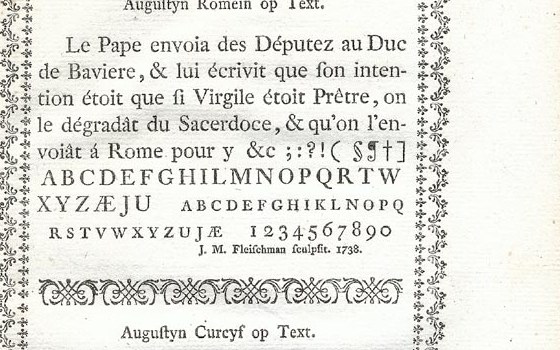
Public domain
Public domain: Printed in Haarlem in 1768 from punches cut in 1738; Fleischman died in 1768 and Enschedé in 1780, and the sheet is out of copyright everywhere; Commons tags the file public domain (Rijksmuseum), and this house reads a faithful photograph of a flat public-domain sheet as carrying no new copyright.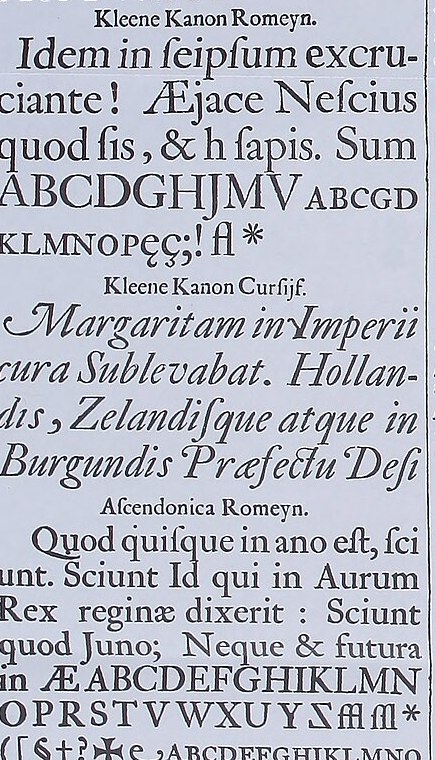
Public domain
Public domain: A specimen sheet printed in Amsterdam in 1681 from types cut by van Dijck, who died in 1669; out of copyright everywhere; the file is a phototype reproduction and Commons tags it public domain; this house reads a faithful reproduction of a flat public-domain sheet as carrying no new copyright.Near it
 Humanist
 Text face
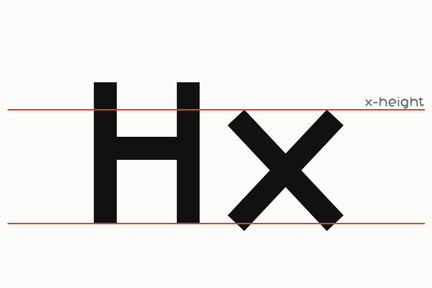 x-height

Where it came from
The Hague school and the Type and Media programme at the Royal Academy of Art are what the modern sense of the term points at.
Sources
- Type and Media, KABK, Royal Academy of Art, The Hague not read