Web brutalism
Also called Brutalist web design
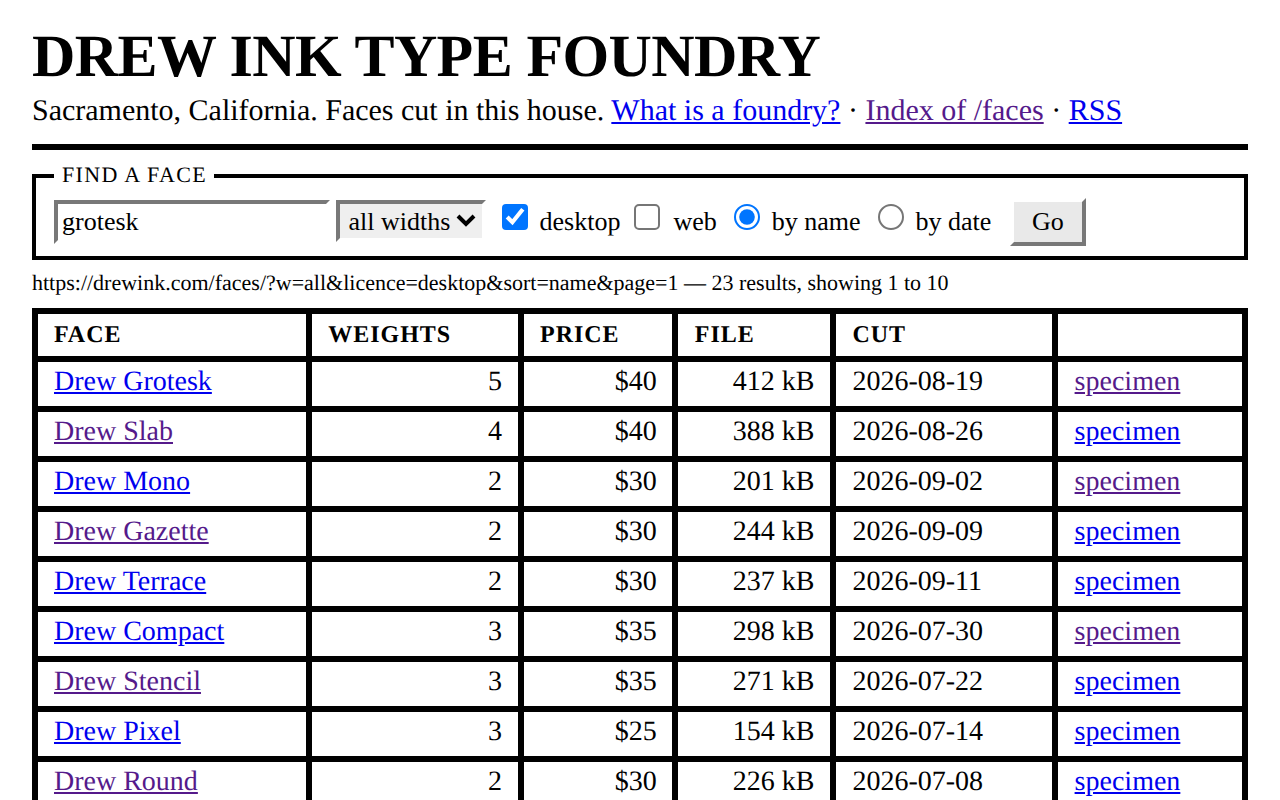
A page that shows its own construction: default type, visible links, hard edges, no smoothing, and no attempt to look designed.
Near it
 Neo-brutalism
What it looks like
Web brutalism
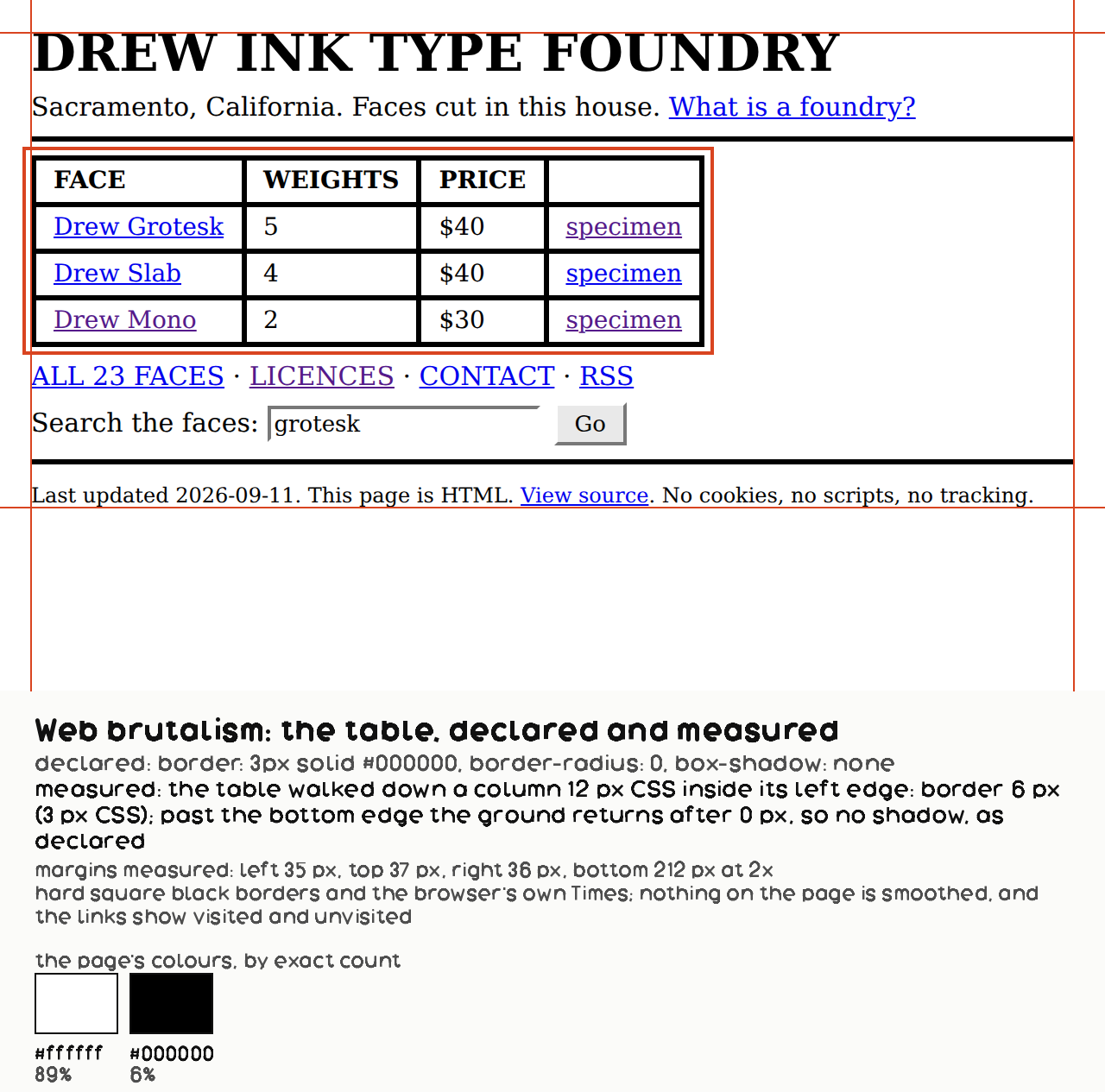
background: #ffffff;
border: 3px solid #000000;
border-radius: 0;
box-shadow: none;
color: #000000;
font-family: Times, serif;
What it is made of
| border | hard, black, square | |
| type | the browser default, or something conspicuously undesigned | |
| colour | system blue links, unvisited and visited both showing | |
| what the site that codified the term says it is | "In its ruggedness and lack of concern to look comfortable or easy, Brutalism can be seen as a reaction by a younger generation to the lightness, optimism, and frivolity of today's web design." | brutalistwebsites.com. Read whole, 2026-09-11. 4,525 words of which FOUR lines are prose: the site is a GALLERY, so nearly all of it is the names and links of the sites it collects. Not a truncated pull and not a failed one — a third shape, and a word count says nothing about any of the three. It is one paragraph and it is the paragraph: the term was collected and named here before it was written about anywhere else, so a single sentence from the gallery outranks a long article about the gallery |
| and the definition is a REACTION rather than a recipe | nothing in that sentence names a colour, a border, a typeface or a layout | which is why the entry's own made_of rows are ours and are measured off our drawing rather than quoted. A style defined by what it is against cannot be specified by its originator, and a record that dressed our specification up as his would be inventing a recipe and attributing it |
Where it came from
Named after the architecture, from béton brut, raw concrete. The web sense was crystallised by Pascal Deville's brutalistwebsites.com in 2014.